At the foot of the mountains, we gently transfer colors—simmered by our family—onto cloth.
Even when we use the same plant, the color shifts with the season, weather, and the way our hands move.
This page is an inviting “gateway to learning,” introducing the world of yamamayu dyeing and the basics of plant-derived dyeing.
Contents
- yamamayu Dyeing: Three Promises
- Basics of Plant Dyes
- Color Guide (Plants & Hues)
- Fixation (Mordanting): How It Works & How We Use It
- About Indigo (The Appeal of Fermentation Vats)
- Aging & Care
- Studio Practice: Circular Making
- Go Deeper (Dye Encyclopedia / Workshops)
- Glossary
- FAQ
yamamayu Dyeing: Three Promises
- With nature. We use what’s close at hand: pruned branches from the garden and satoyama, and plants we grow such as indigo and marigold. We never overharvest food plants for wildlife, and we follow the rhythm of the seasons.
- Gentle yet durable. We center on aluminum-based mordants to fix color without stressing fibers, and add a touch of iron only as needed for depth. We value the balance between kindness and practicality.
- Creating circularity. Dyed-out plant matter returns to the soil as compost; remaining liquors are neutralized/diluted and disposed of appropriately. We give back gently to the land that gave us color.
* On this page we use the terms “plant dyes / natural dyes.” While other labels are common, we standardize wording here to avoid confusion.
Basics of Plant Dyes
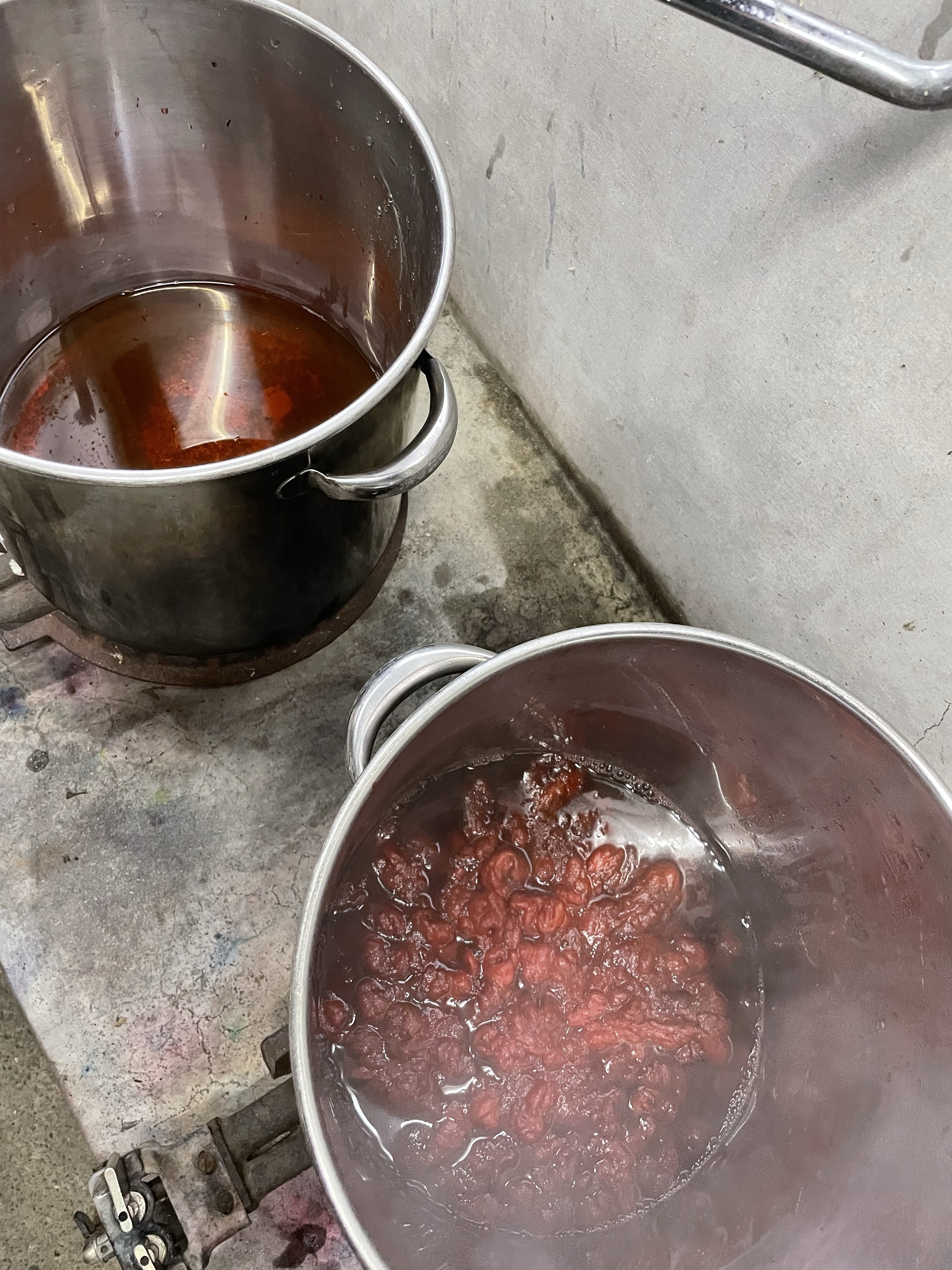
“Plant dyeing” draws colorants from leaves, flowers, bark, fruits, and roots by simmering and transfers them onto yarns and cloth. Because some colorants don’t readily stay on fibers, mordanting helps bind dye and fiber. Usage varies slightly by fiber (silk/wool/cotton/linen) and by dye chemistry.
In short: “Simmer → bind with a mordant → layer color.” Material, season, and handwork make the color gently shift—creating a one-of-a-kind expression.
Color Guide (Plants & Hues)
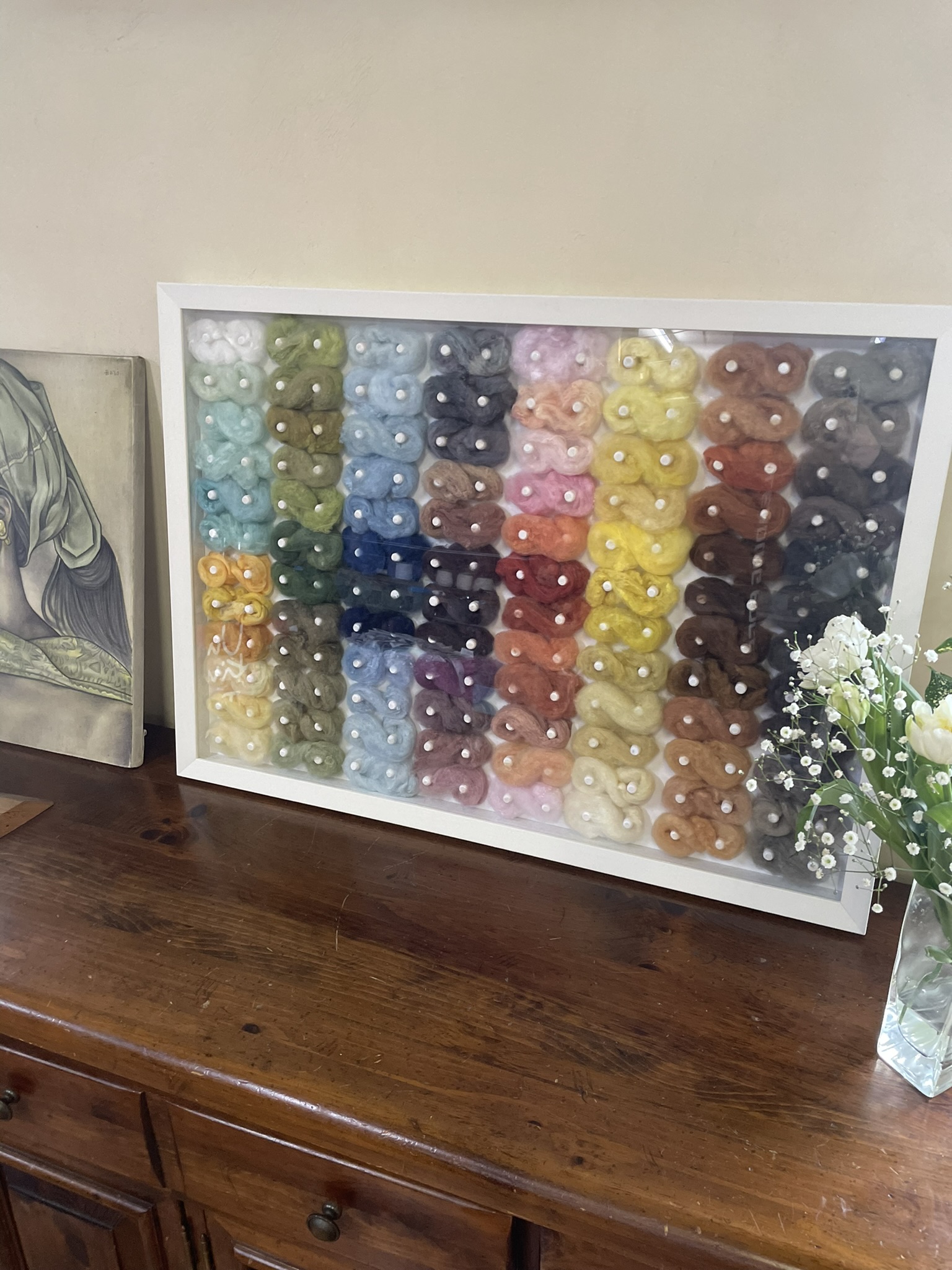
- Yellow to yellow-green: Marigold, goldenrod, kariyasu (Eulalia), onion skins, etc.
- Brown to dark brown: Bark of konara/sawtooth oaks and other Fagaceae; acorns, etc.
- Pink to red: Madder (reference: cochineal is an insect dye)
- Grayish / muted tones: Iron mordanting shifts yellow → olive, pink → deep purplish, etc. (pairs well with tannin)
- Blue: Indigo (vat dyeing via fermentation or reduction)
These are our studio swatches. The season and mordant show directly in the cloth’s expression.
In short: By combining plant × season × mordant, you can express everything from soft pastels to deep, earthy tones.
Fixation (Mordanting): How It Works & How We Use It
Mordanting directly affects brightness and fastness. At yamamayu, to protect fibers and improve reproducibility, we follow these basics:
Basic Guidelines
- Silk & wool: Aluminum-based mordant (alum) as the default; add a very small amount of iron for tone control.
- Cotton & linen: Tannin pre-treatment → aluminum mordant (adjust with calcium carbonate/lime as needed) → dye.
- On iron mordanting: It deepens tone and often improves fastness, but excessive concentration/time can harden fibers. We keep it low and brief.
Mordants We Use in the Studio
- We primarily use iron, alum, and lime, and select other mordants only if a specific color calls for them.
- Lime mordanting carries less environmental load than heavy-metal mordants and fits naturally into circular practice. Because it is strongly alkaline, we adjust pH for use and for wastewater.
Workshop Adjustments
- For safety and ease, participants mainly use alum (aluminum mordant). We add a small iron bath so everyone can “enjoy the difference” in tones.
- We aim for depth and discovery while prioritizing mordants that are gentle for people and the planet.
TIP | Gentle Recipe Design
Using “alum as the base / a pinch of iron for atmosphere” makes it easier to balance reproducible color with soft hand.
In short: Let alum do the main “binding,” and treat iron like a spice—used sparingly for expression. At yamamayu we also employ lime and adjust to the cloth and its purpose.
About Indigo (The Appeal of Fermentation Vats)

Indigo is not applied by simply transferring dissolved blue to fiber. Instead, the blue component is reduced into a soluble form, and after dyeing it oxidizes in the air to set. Fermentation vats rely on microbes and allow layered, nuanced blues. Subtones leaning slightly red or green add depth to the final color.
In short: Through cycles of reduction and oxidation, indigo grows into a “living blue.”
Aging & Care
Plant-derived colors slowly change with light and washing. We don’t see fading as mere deterioration but as a landscape that grows with the user. For long enjoyment, we recommend:
- Avoid direct sunlight; air-dry and store in shade.
- Gently hand-wash with neutral detergent, rinse well, and dry in the shade.
- For iron-mordanted muted tones, avoid strong alkalis and long soaking (to prevent hardening).
In short: With mindful care, colors mature softly and settle into daily life.
Studio Practice: Circular Making
- Materials: Prunings from the satoyama, seasonal herbs, and indigo & marigold grown in our field. We take only what we need.
- Mordants: Aluminum as the base; a little iron for depth. We put fiber-kind methods first.
- Color choices: We pair plant dyes with select chemical dyes according to purpose (e.g., chemical dyes where high light/wash fastness is essential; plant dyes for gentle nuance).
- Circularity: Residues go to compost; remaining liquors are neutralized/diluted appropriately. We are mindful of local ecosystems.
A balance of gentleness and durability that lives with the user’s everyday life—
that is yamamayu dyeing.
Go Deeper (Dye Encyclopedia / Workshops)
Dye Encyclopedia (in preparation)
We will organize seasonal plants × mordants × substrates with sample photos and color data.
Read & Watch (Past Posts / Videos)
- Petal Dyeing (Carnation)
- Petal Dyeing (Follow-up)
- Petal Dyeing (Vinca major / Sakura postcard)
- Petal Dyeing (Deco)
- Seasonal Dye Notes
- Watercolor-like Flower Dyeing
- Seasonal Dyeing (Record)
- [Vlog] Dyeing & Silk-Floss Stole (Mugwort)
- Dyeing with Bayberry
- Dyeing with Glossy Privet
- Dyeing with Local Plants (Camellia sasanqua, etc.)
- Shibori Expressions
- Hands-on Workshop (June 2023)
- Natural Dyeing Class
- Dye & Weave Class in Yamanashi (July 2023)
Workshops
A day of simmering color, surrounded by the scents of the satoyama. Beginners are welcome. See dates →
Glossary
Plant / Natural dyes: Dyeing that uses colorants derived from plants and other natural sources. We standardize this wording on this page.
Mordant: A process that helps bind dye to fiber. We choose aluminum or iron, etc., according to purpose.
Tannin: Astringent compounds in plants. In cotton/linen pre-treatment, they create “footholds” and aid fixation.
Fermentation vat: One way to prepare indigo, harnessing microbes to maintain a reduced state for dyeing.
FAQ
Q. Are plant dyes always safer than synthetic dyes?
A. Sensitivities vary by person and skin condition; some plant dyes may not suit everyone. Handle metal salts for mordanting with care, and those with sensitive skin should patch-test. At yamamayu we default to aluminum-based mordants and use iron at low concentration for short times.
Q. Which mordant should I start with?
A. For silk/wool, alum (aluminum) is easy to handle. For cotton/linen, a tannin pre-treatment → aluminum mordant is stable. Add a touch of iron for tone. Household alum (potassium aluminum sulfate) is a convenient option.
Q. I’m worried about fading. How can I enjoy the colors longer?
A. Avoid direct sun; air-dry and store in shade. Wash gently with neutral detergent, rinse well, and dry in shade. Avoid strong alkali and long soaks. If colors fade, re-dyeing is also possible.
 山まゆの里染織工房