Small-batch making, natural materials, and textiles meant to last.
At yamamayu, sustainability means a textile practice that continues through the relationship between nature and human hands.
For us, making cloth is not only about using materials well, but also about what remains afterward, how things return, and what can be carried forward to the next generation.
Five Ways We Practice Sustainability
Circularity / Reuse / Tools / Community / Care
Circularity
yamamayu’s textile practice takes place within a cycle where mulberry, plants, silkworms, and daily life meet.
Dye plants and silkworm pupae are returned to the soil as compost, becoming part of the next life cycle.
Reuse
In weaving, leftover yarns and small remnants inevitably appear.
At yamamayu, we do not let them end as waste. We knot, connect, and transform them into new forms of expression.

Tools We Continue to Use
In our studio, we continue to use handlooms that require almost no electricity, as well as old power looms that are repaired and maintained over time.
To keep using tools with care, and to pass them on into the future, is also part of circular making.

Community
yamamayu values work that remains rooted in its local place.
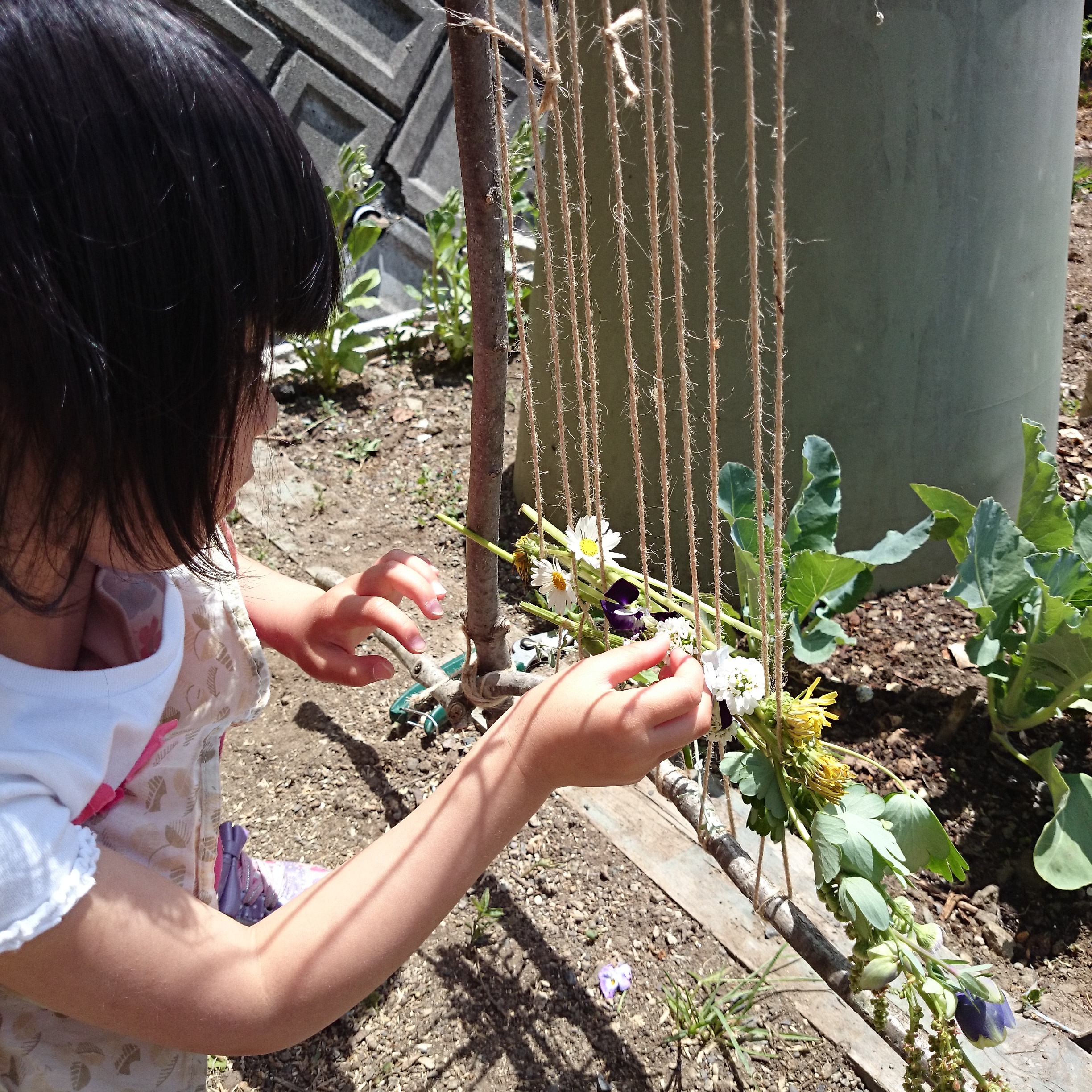
Through nature-based programs for schools and early childhood education, and through creating work around floss-silk thread making with senior members of the community, we hope to carry textile culture into the future.

Care and Longevity
Textiles develop their character through long use.
We ask that they be cared for gently—washed by hand with mild detergent, dried in the shade, and stored away from strong light—so they may remain in life for many years.

Materials and Process
We work mainly with natural fibers such as cotton, silk, and tensan silk, and choose plant dyes as well as lower-impact synthetic dyes where appropriate.
Traditional methods such as fermented indigo vat dyeing, botanical dyeing, and weaving are respected, while reproducibility and safety are also carefully considered.

Repair, Re-dyeing, and Return
To help textiles live longer, we are gradually building a system for taking back worn pieces and re-dyeing them.
In this way, they may take on a new color and return once again to everyday life.
At yamamayu, we do not see cloth as something that is simply made and finished.
We hope to carry it forward as something that lives with nature, grows through use, and continues into the future.
 山まゆの里染織工房