Mawata making begins by boiling cocoons.
This step gently loosens the outer protein layer of the cocoon so that the silk layers can open more easily.
At yamamayu, we try to do this without pushing the fiber too far, always watching the cocoon itself.
Note: Too much heat, too much time, or too much alkali can damage the silk fiber.
The temperatures, timing, and ratios below are simply the methods used in our studio.
Contents
- Soaking the Cocoons
- Studio Methods
- Rinsing and Neutralizing
- How to Tell It Is Ready
- A Little Science
- Safety and Environment
- FAQ
Soaking the Cocoons
Dry cocoons tend to float and boil unevenly, so they are first soaked well in water.
We use warm water and gently press them down so that moisture reaches the inside.
- Soak in warm water for 30–60 minutes
- Press gently so water reaches the inside of the cocoon

Studio Methods
In the studio, we use two approaches: one slower and gentler, the other a little quicker.
In both cases, the key is not to overdo it.
Gentle Method
- Cocoons: 500 g
- Water: 10 L
- Baking soda: 60 g
- Powdered soap: 10 g
- Temperature and time: 90–95°C for 60–90 minutes
- Turn gently from time to time
This method is slower and milder, and often leads to a softer, fuller result.
Quicker Method
- Cocoons: 500 g
- Water: 10 L
- Soda ash: 20 g
- Powdered soap: 10 g
- Temperature and time: 95–98°C for 30–45 minutes
- Turn gently from time to time
This method works more quickly, but because the alkali is stronger, it is important not to go too far with time or temperature.
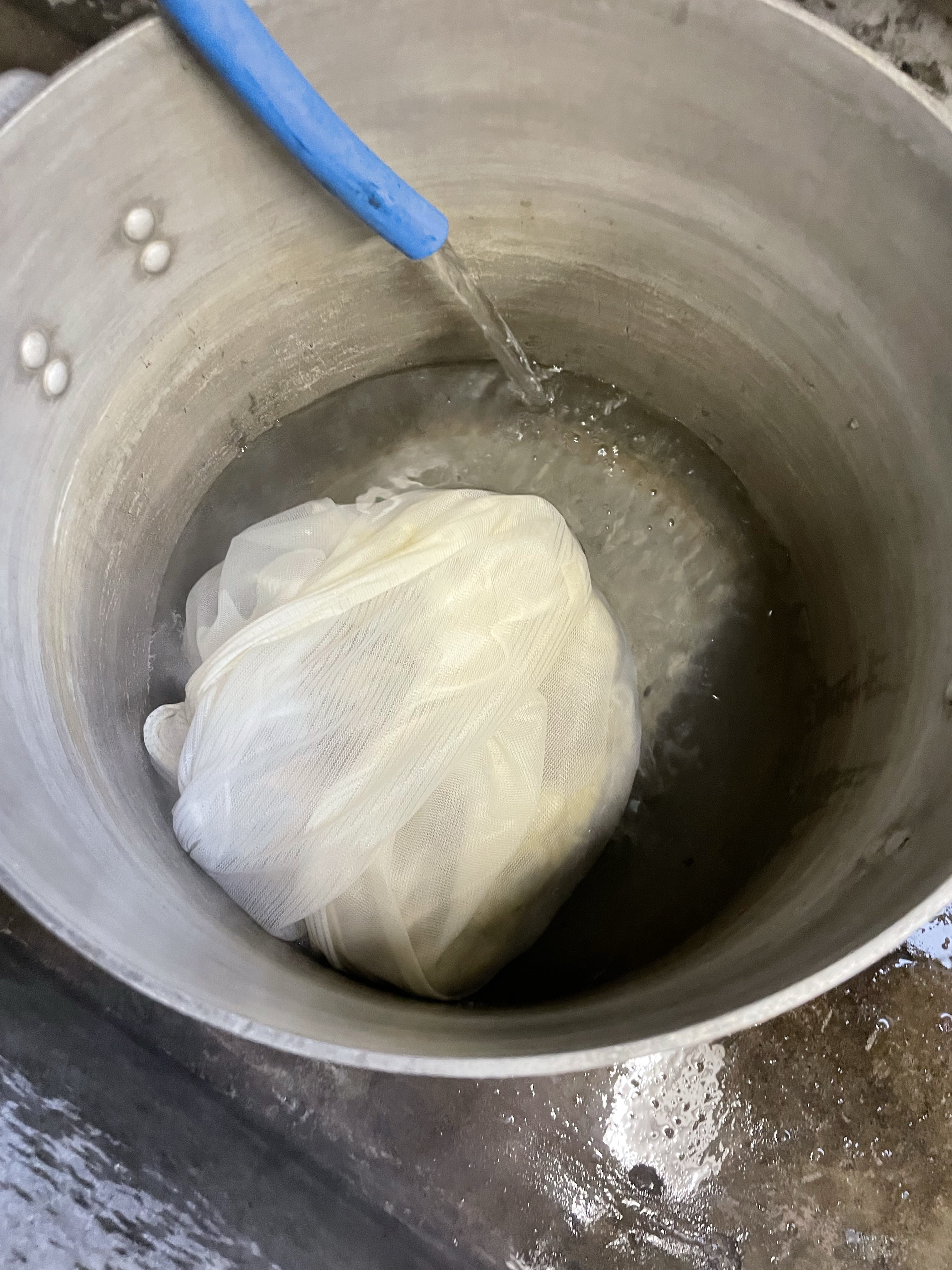
Rinsing and Neutralizing
- Rinse well in warm water
- If needed, use a short neutralizing rinse with citric acid or a small amount of vinegar
How to Tell It Is Ready
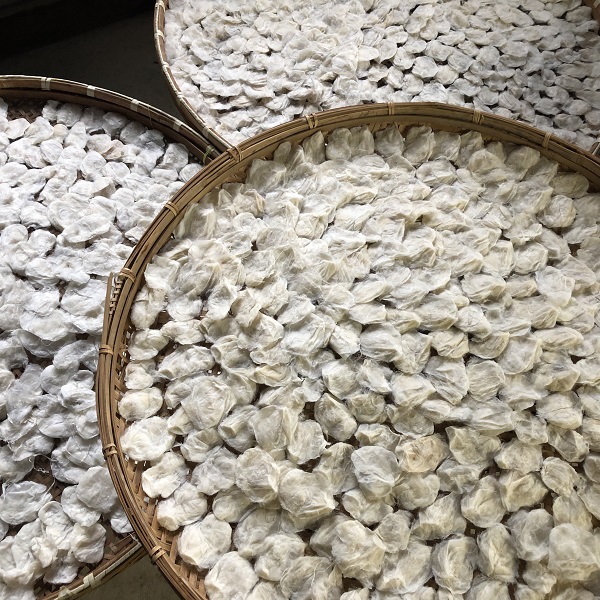
Take out one cocoon and check it after rinsing.
If the layers open gently and evenly without force, it is ready.
Knowing when to stop is one of the most important parts of keeping the silk beautiful.
A Little Science
The cocoon surface contains a protein called sericin.
Heat and alkali help loosen it, making the cocoon layers easier to open.
But too much heat or alkali can also affect fibroin, the main silk protein, so temperature, time, and concentration all matter.
Safety and Environment
- Use heatproof gloves and ensure good ventilation
- Dilute used liquid as needed and handle it gently
- Return pupae and cocoon waste to compost where possible
FAQ
Q. How do you choose between baking soda and soda ash?
A. Baking soda is gentler and slower. Soda ash works faster, but needs more care.
Q. How much sericin should be removed?
A. For mawata making, only enough to let the layers open naturally. Going too far may affect strength and texture.
Q. Why use soap?
A. It helps water enter the cocoon more evenly and supports a more stable result.
Continue Reading
After preparing the cocoons, the next step is drawing out thread by hand. You can also continue to the Studio Journal or explore the finished textiles.
 山まゆの里染織工房