— Introducing our family’s textile practice, born from nature’s cycles and handwork.

Spinning thread, dyeing, and weaving while living close to the life of the mountains—
yamamayu textiles are created in harmony with nature.
What yamamayu Textile-Making Means
Listening to materials within nature’s cycles
At yamamayu, we value a textile practice that begins with raising domesticated silkworms and wild silkworms (tensan).
Although we cannot produce every thread in-house, every material we use is carefully chosen by eye and hand.
Within the meeting point of nature’s cycles and the time of handwork, we weave only what is needed, with care.
From Cocoon to Cloth
*Click each circle to open a detailed page. Some detailed pages are currently available in Japanese only.
STEP 1: Cocoons and Thread
— Facing the thread of life —
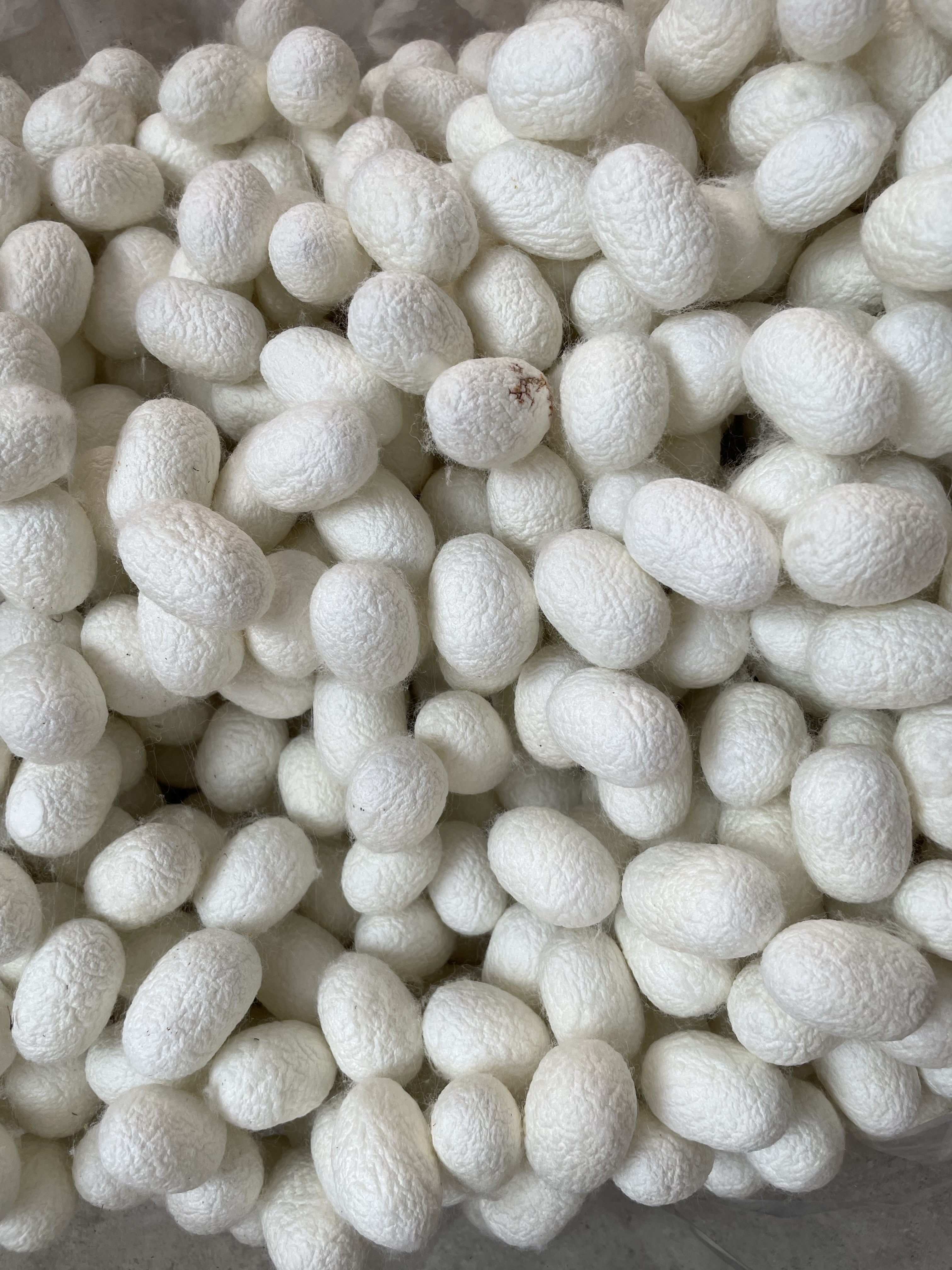
Domesticated silkworms feed on mulberry, while wild tensan feed on sawtooth oak. Their different environments create distinct texture and color in the thread.

After the pupa is removed, the cocoon is gently opened into a soft sheet of silk floss, then hand-spun into thread.

By varying twist, thickness, and strength, the textile takes on many different expressions.
STEP 2: Dyeing and Spinning
— Color is the layering of memory and time —

Indigo, marigold, mugwort, plum, amur cork tree—receiving the colors of the seasons.

We carefully choose lower-impact dyes in order to balance vivid color and durability.

We spin in small amounts, making only as much as is needed.
STEP 3: Weaving
— The rhythm of sound and hands forms the textile —

Each thread is set carefully, one by one, exactly as designed.

We use handlooms that require no electricity and continue to restore old power looms for long-term use.

Tools that support a sustainable way of making for the future.
Looking Toward the Future
Making cloth is not only about using materials. It also means returning things to nature, continuing to use tools with care, and carrying textile culture forward within the community.
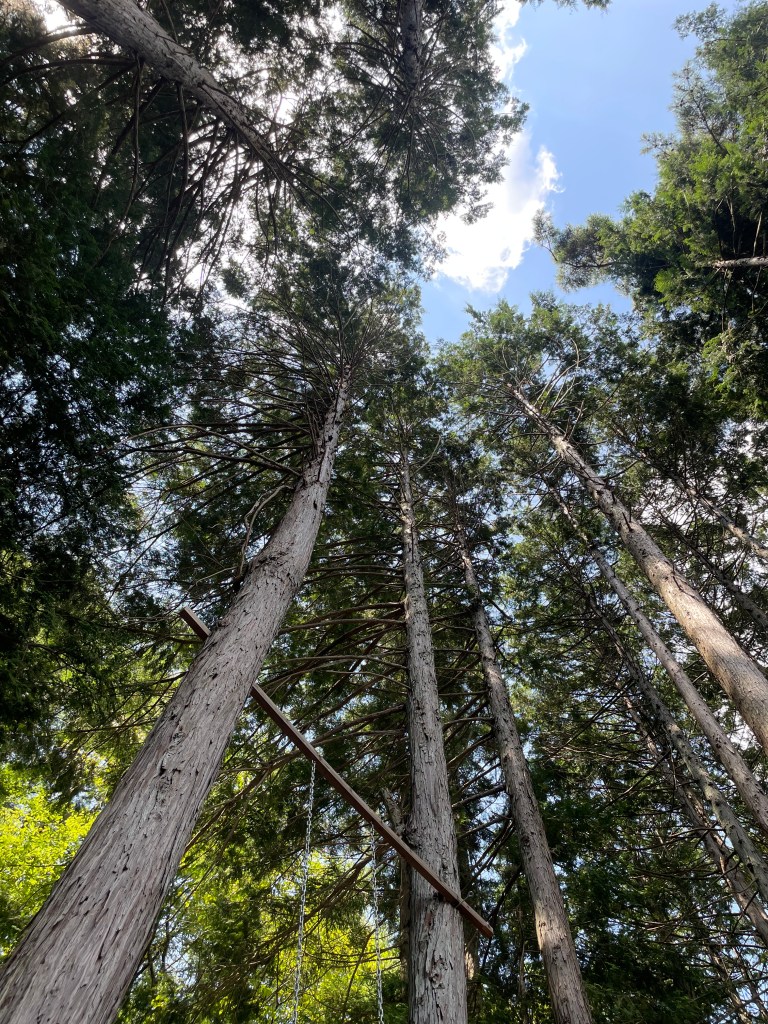
Pupae and spent dye plants return to the soil as compost.
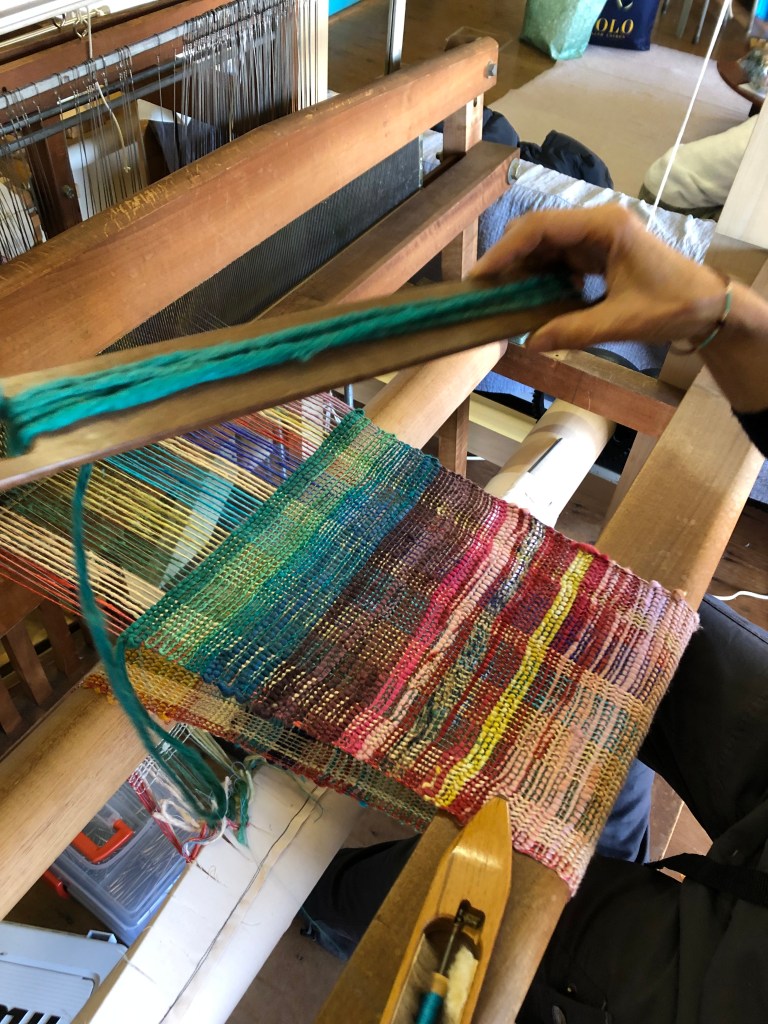
Leftover threads are tied and transformed into Mottainai Art.

Treadle looms use no electricity, and old machines are repaired and used with care.

Nature programs for children and silk-floss work shared with senior members of the community.
Where yamamayu Textiles Are Born

Our studio is in the satoyama landscape of Yamanashi.
Amid distinct seasons, we make textiles with the movement of wind, light, and water.
Inheriting a weaving lineage that began in the Meiji era, we create cloth that reflects both present life and the nature around us.
Studio Journal

In the days of turning cocoons into thread and thread into cloth, there are moments when we pause and reflect.
In the Studio Journal, we write about making, materials, small discoveries, and life in the satoyama.
View the Textiles

Explore yamamayu textiles shaped by inherited skills and carefully chosen materials.
 山まゆの里染織工房