Cloth begins with thread.
At yamamayu, we work with different kinds of thread: hand-spun mawata thread from our own cocoons, reeled silk thread sourced from a twisting workshop in Hachioji, and future fibers such as cotton and kudzu that we are beginning to explore.
As the thread changes, so do the light, softness, tension, and warmth of the textile.
This page introduces the threads that support yamamayu’s making in a simple and approachable way.
Contents
- Hand-Spun Mawata Yarn
- Reeled Silk Thread
- Tensan Silk
- Future Threads
- Thread and Sustainability
- Gallery
- FAQ
Hand-Spun Mawata Yarn
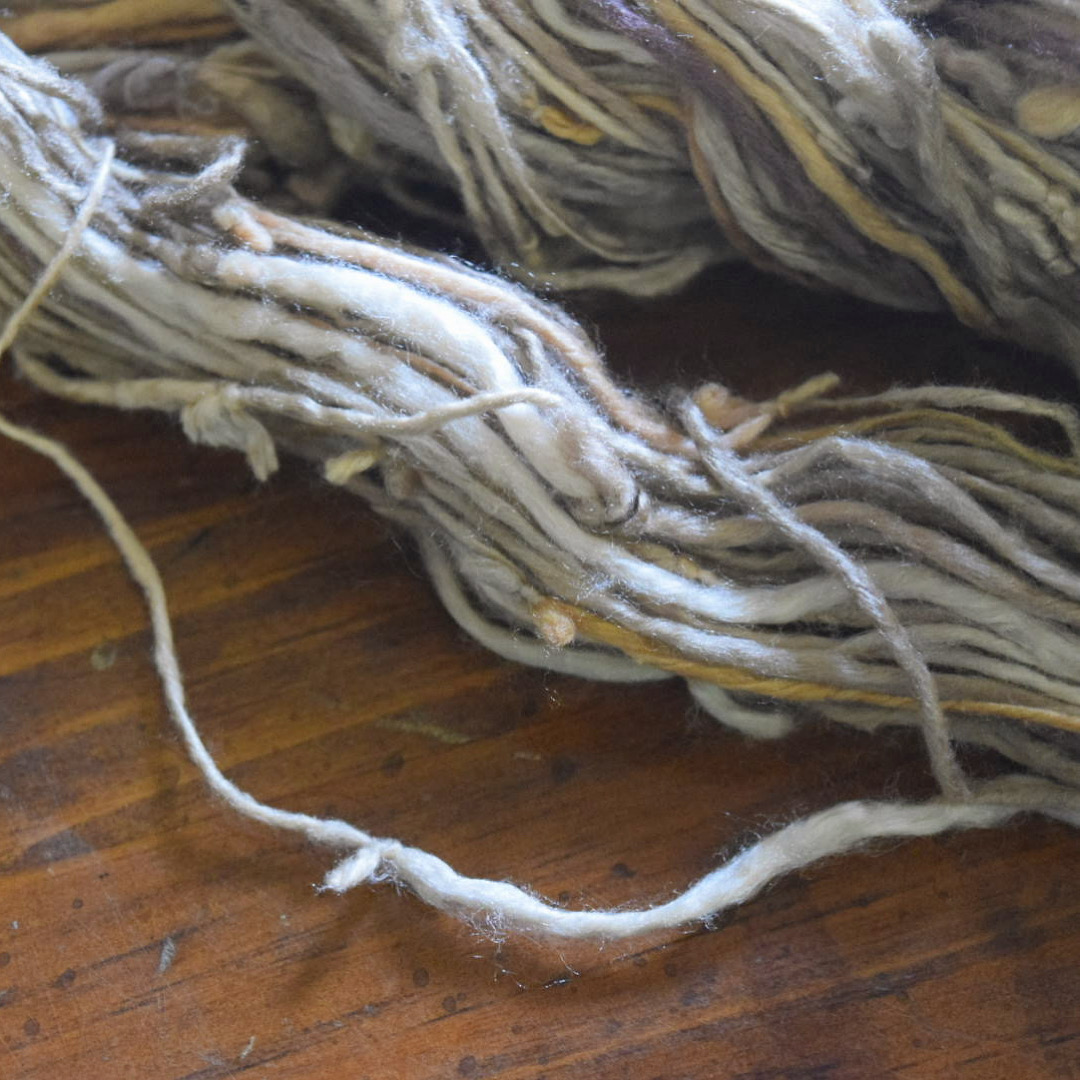
Material: cocoons from domesticated silkworms raised in the studio, and imperfect cocoons that are not reeled into silk
Process: boil cocoons → open into mawata → spin by hand
Character: soft, light, warm, breathable; its expression changes depending on the amount of twist
Uses: stoles, kimono cloth, mawata bedding fill, and artwork

Reeled Silk Thread
Source: custom-ordered from a twisting workshop in Hachioji
Role: brings strength, precision, and expressions that hand-spun mawata alone cannot provide
Dyeing: colored in the studio with both plant-based dyes and lower-impact chemical dyes

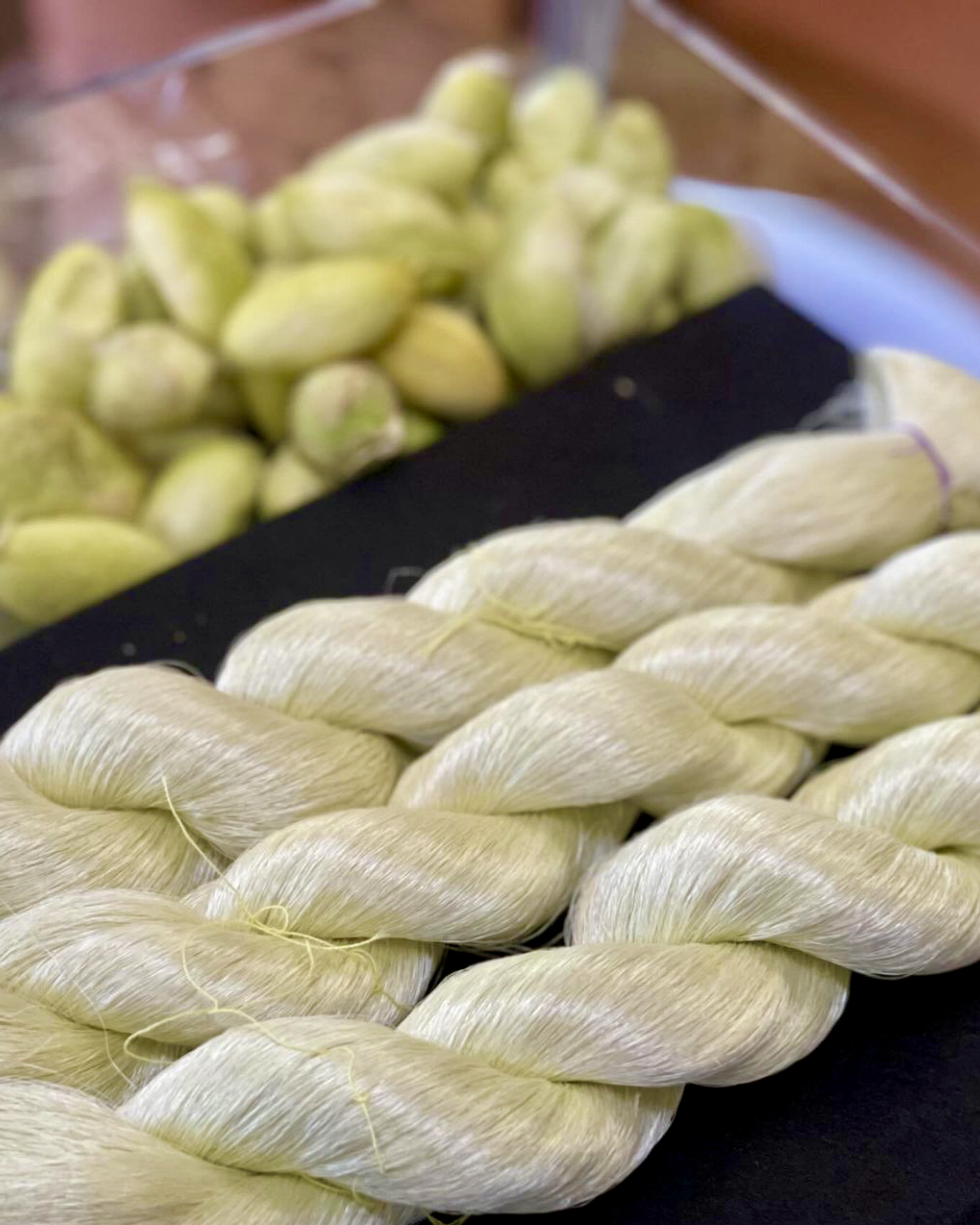
Tensan Silk
Material: tensan cocoons raised in our studio and in Iwate
Character: rare, strong, and marked by a pale jade-like natural luster
Uses: special works such as high-end stoles and exhibition pieces
Future Threads
Cotton: we are experimenting from trial cultivation toward ways of spinning and weaving it into cloth.
Kudzu: we are exploring how a locally growing plant fiber might become thread.
Aim: to move a little closer to self-supported materials and deepen our dialogue with the gifts of nature.
Thread and Sustainability
- Reuse: leftover threads are tied and used again
- By-products: pupae and used dye plants are returned to compost
- Tools: treadle looms and old weaving machines are repaired and used for many years
Thread is something received from natural cycles and, in time, returned to them.
→ Read Sustainability
Gallery


FAQ
Q. What is the difference between hand-spun mawata yarn and machine-made silk thread?
A. Hand-spun yarn is softer and more expressive, while machine-made silk is more even and stable.
Q. What makes tensan silk special?
A. Its pale jade-like luster, strength, and rarity.
Q. What kinds of dyes do you use?
A. We use both plant dyes and lower-impact chemical dyes, depending on the purpose.
Continue Reading
Read more about the background of the studio, follow the Studio Journal, or explore the textiles shaped by these threads.
 山まゆの里染織工房