
Mawata is silk that has been opened from silkworm cocoons into a soft, cotton-like form.
Many people are surprised to learn that mawata is not cotton at all, but silk born from cocoons.
Light, warm, and gently lustrous, it has long been used in Japan for bedding, kimono linings, and fine textiles.
At yamamayu, we see mawata not only as a material, but as something that continues into thread, cloth, and everyday life.
This page introduces mawata in a simple way—what it is, how it differs from cotton, and how it becomes part of textile making.
Contents
- What Mawata Is
- Mawata and Cotton
- Different Threads from Cocoons
- Mawata in Daily Life
- Why Mawata Is Special
- How Mawata Becomes Cloth
- Ways to Enjoy Mawata
- Circularity and Care
- FAQ
What Mawata Is
Mawata is made by softening cocoons, removing the pupae, and opening the cocoon layers into thin sheets that are gently stacked.
It may look like cotton, but it is silk.
From this airy material, thread can be drawn by hand and connected into cloth.
→ Read more about hand-spun mawata thread
Mawata and Cotton
Both are natural materials, but they come from very different origins.
Cotton comes from the seed fiber of the cotton plant, while mawata comes from silkworm cocoons.
| Item | Mawata (Silk Floss) | Cotton |
|---|---|---|
| Origin | Silkworm cocoons | Cotton plant |
| Fiber type | Long filament silk | Short staple fiber |
| Feel | Light, warm, smooth, breathable | Strong, absorbent, familiar for daily use |
| Traditional uses | Bedding, kimono linings, fine textiles | T-shirts, denim, towels |
Different Threads from Cocoons
A cocoon can lead to different kinds of silk thread, depending on how it is handled.
- Reeled silk: long filament drawn from fine cocoons
- Tama-yarn: thread from double or irregular cocoons, often with more texture
- Spun silk: yarn made by re-spinning fibers from imperfect cocoons
- Mawata → tsumugi yarn: thread drawn and spun by hand from silk floss, with soft warmth and character
Mawata in Daily Life
From the Meiji era through the middle of the Showa period, mawata was part of everyday life in Japan.
It was used in bedding, clothing, and gifts for newborn children, valued for being both light and warm.
The culture of using even imperfect cocoons fully is also part of what gives mawata its depth.
Why Mawata Is Special
Mawata is light, warm, softly lustrous, and gentle to the touch.
Its fine silk fibers hold a great deal of air, which is why it feels airy yet insulating.
It also absorbs and releases moisture well, helping it stay comfortable across the seasons.
How Mawata Becomes Cloth
The process begins by boiling cocoons.
Once softened, the pupae are removed, the cocoon layers are opened and dried, and the silk becomes mawata.
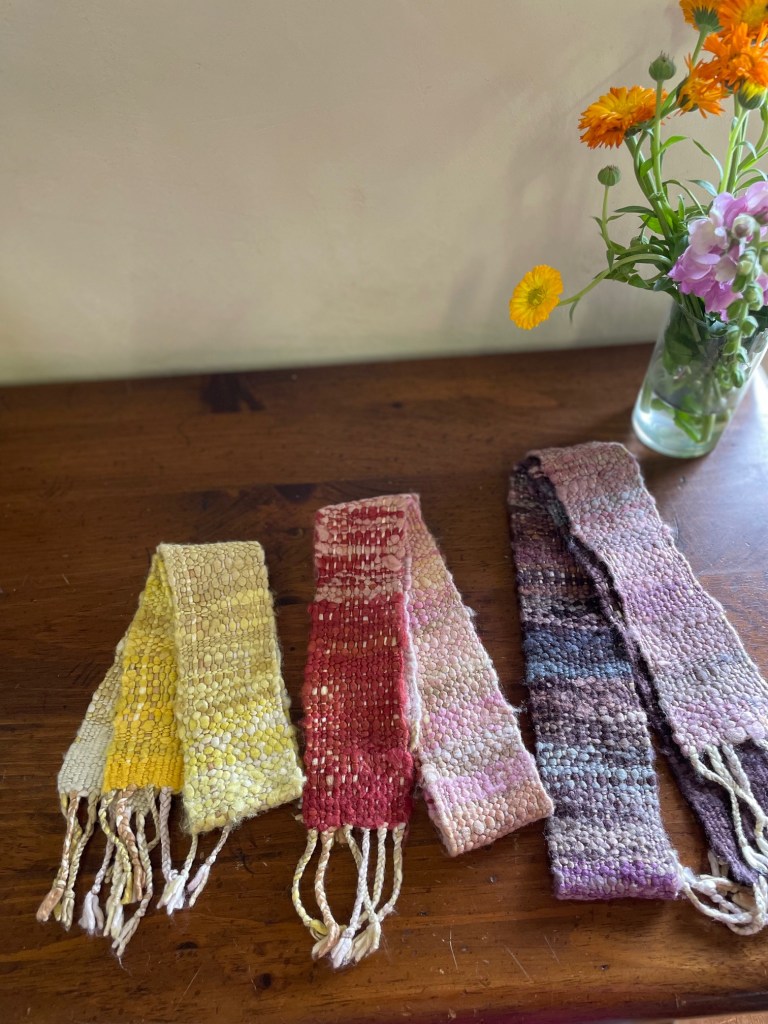
From there, it is spun into thread, dyed, and woven into cloth.
→ How to Boil Cocoons
→ Spinning Thread from Mawata
→ About Thread
Ways to Enjoy Mawata
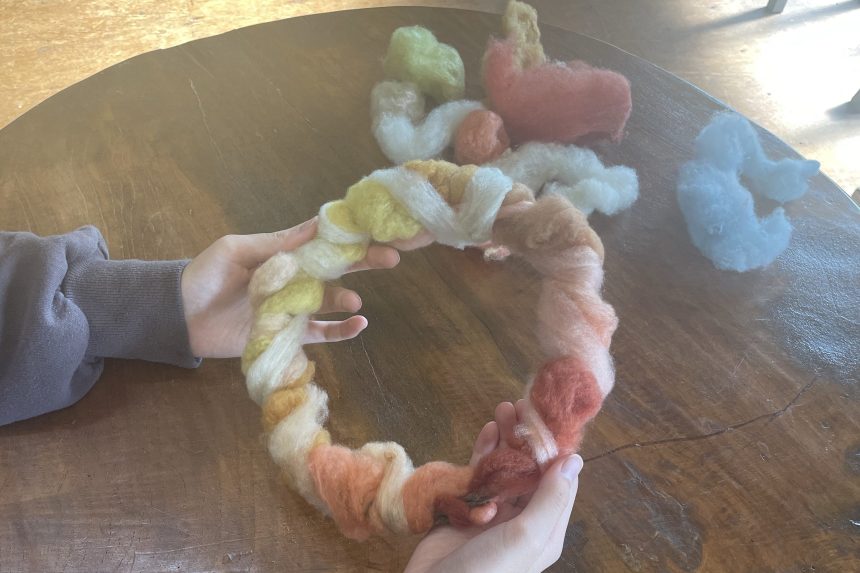
Mawata can appear in many forms—not only in quilts and kimono, but also in wall pieces, small objects, wreaths, and workshops.
At yamamayu, it is welcomed as both a material for making and a quiet presence in daily life.

Circularity and Care
At yamamayu, we try not to waste the life received from cocoons.
Pupae are returned to compost, used dye plants go back to the soil, and leftover threads are reused in “Mottainai Art.”
In this way, our respect for natural cycles becomes both sustainable and ethical.
FAQ
Q. What is the difference between mawata and cotton?
A. Mawata is silk opened from cocoons; cotton is a plant fiber.
Q. Why is mawata so warm?
A. Its fine silk fibers hold a great deal of air, which makes it light yet insulating.
Q. Can mawata be used in summer?
A. Yes. Because silk absorbs and releases moisture well, it remains comfortable even in humid seasons.
Continue Reading
Learn more about the studio, read reflections from the making process, and explore the textiles that grow from mawata.
 山まゆの里染織工房