Threads slipping inward, threads tangling along the way.
After doing this work again and again, I have finally learned to approach warping with a little more calm.
Even after doing this process dozens of times, it is still the part that makes me most tense.
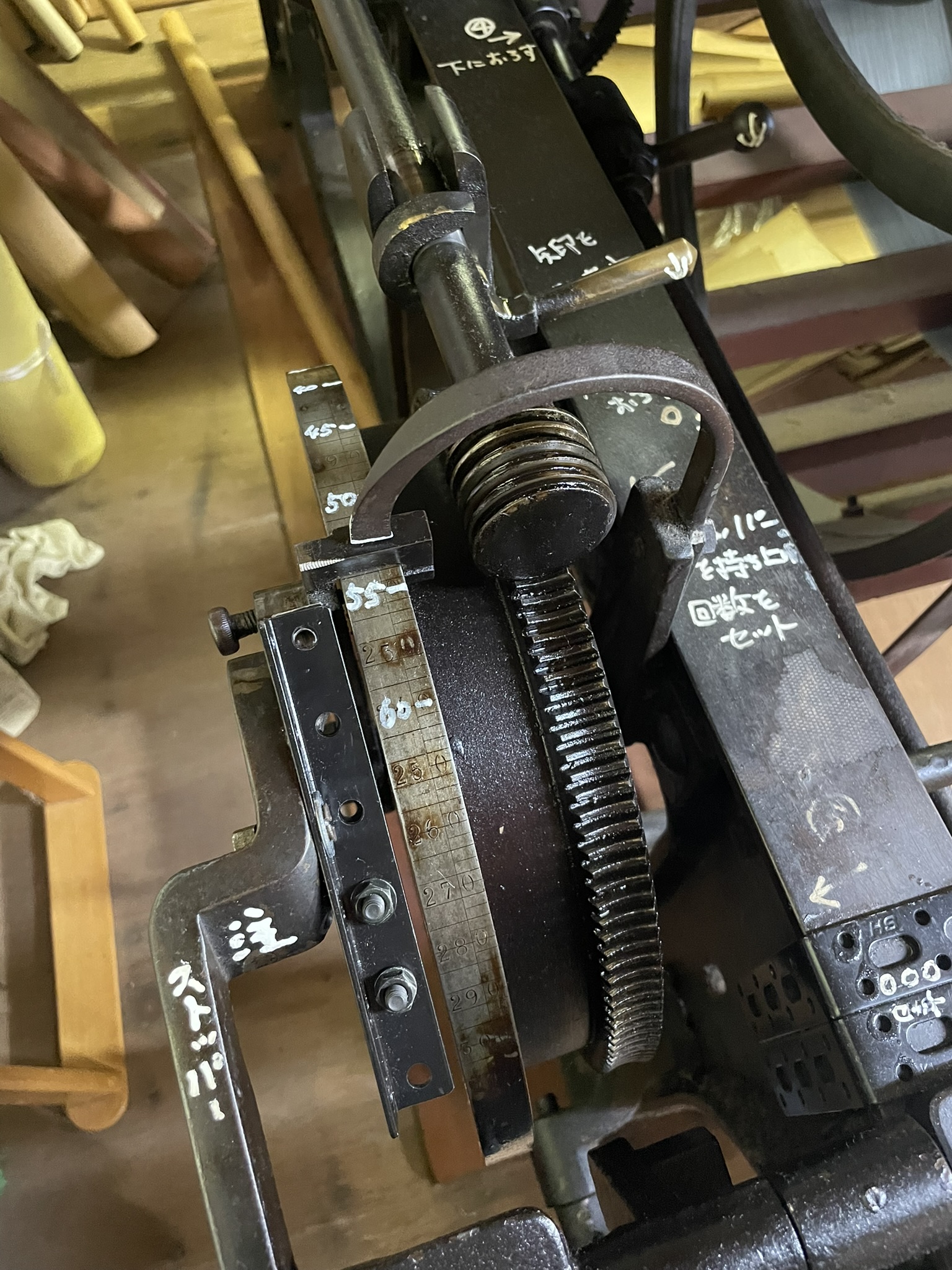
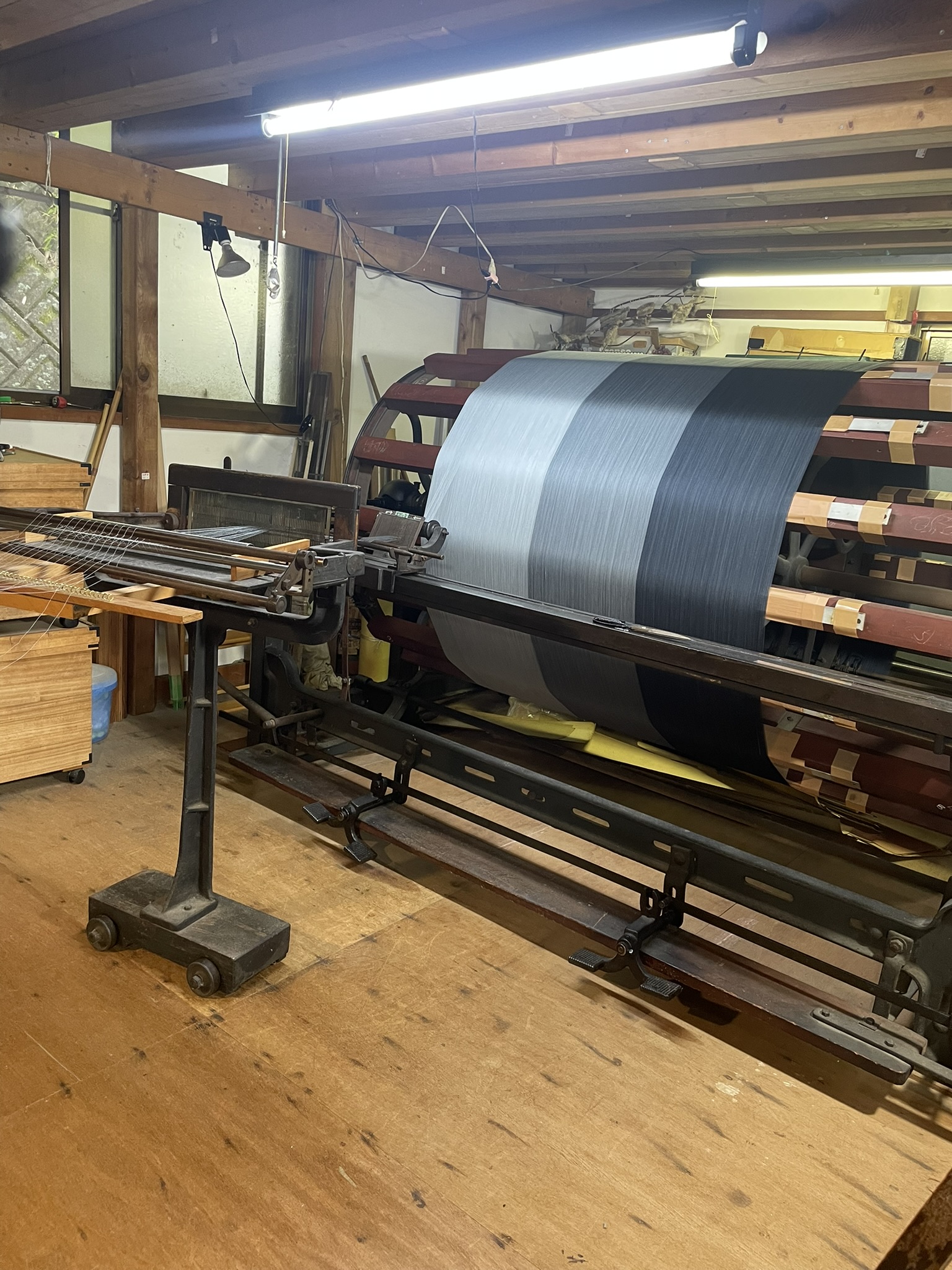
We have added small devices to the old warping mill as needed, including one for checking the number of turns. We continue to repair and adapt the machine ourselves as we use it.
Even so, we count the turns aloud.
With our hands, we feel the tension of the threads and sense whether any of them are close to breaking.
With our eyes, we watch to see if any thread is about to run out.
With our ears, we listen to the sound of the machine moving.
There is no device that automatically stops the machine when a thread breaks, so the three of us prepare the warp while relying on several senses at once.
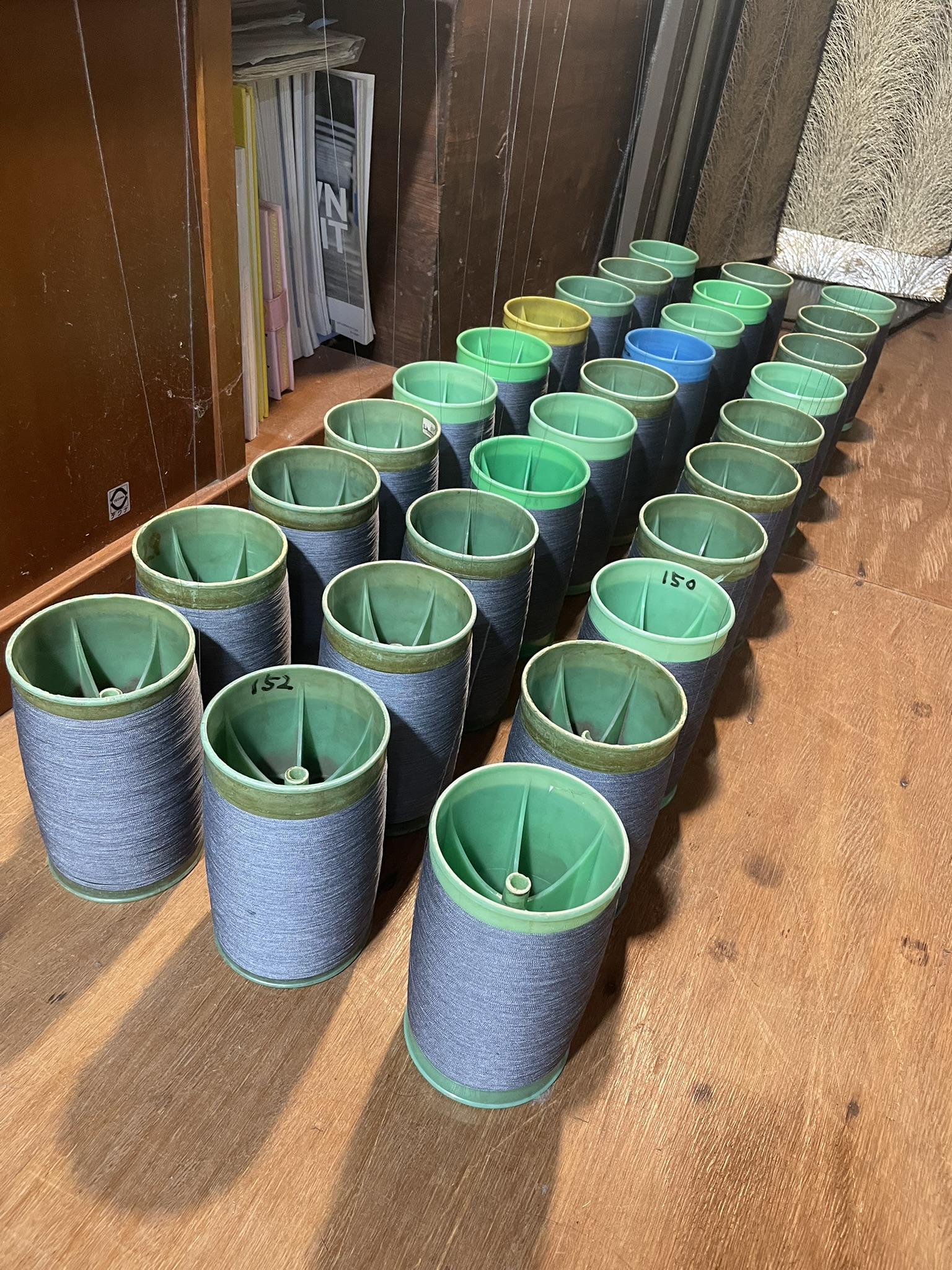
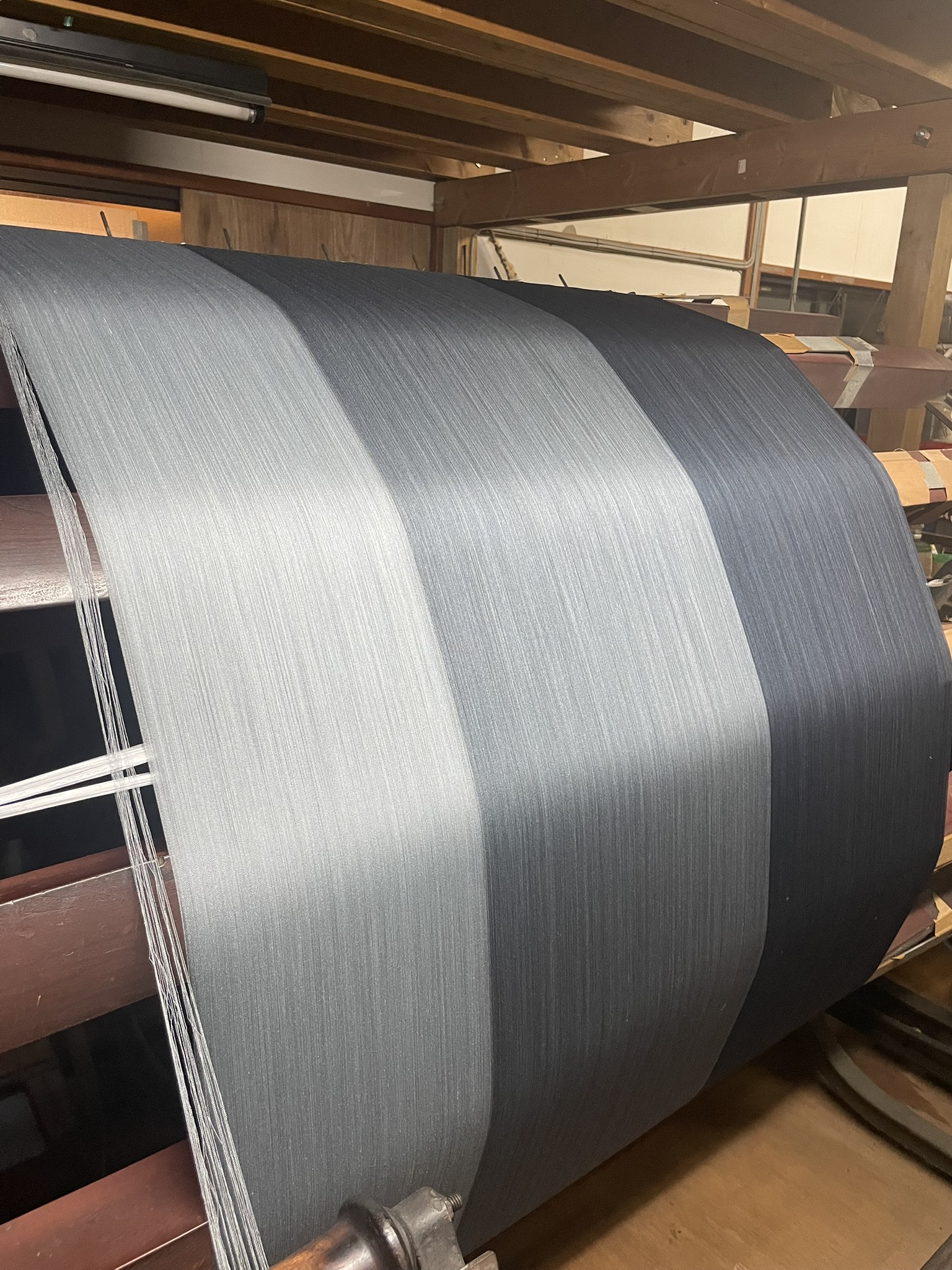
These warp threads will become the foundation of the cloth we are about to weave.
When using Tensan silk thread, we sometimes move the warping mill by hand because the threads are delicate and can easily break.
The other day, the leather belt that moves the gears broke, and we quickly attached a new one.
Because it is an old machine, we can repair it ourselves, make small adjustments, and continue working with it.
This warping mill, too, is one of the tools that has supported our cloth-making over the years.
Learn more about the warping process → Warping